Home Inspections
Why do you need a home inspection?
- To identify any safety concerns and/or repairs that should be undertaken.
- To provide clarity and document problems with the building that should be addressed by professional, qualified contractors
- To provide peace of mind
We do a visual examination of all major systems and components as outlined in the CAHPI Standards of Practice including; Structural , Exterior , Roof , Plumbing , Electrical , Heating , Fireplace , Air Conditioning , Interior , Insulation and Vapour Barriers , Mechanical and Natural Ventilation Systems. More Details
What’s Included in a Home Inspection?
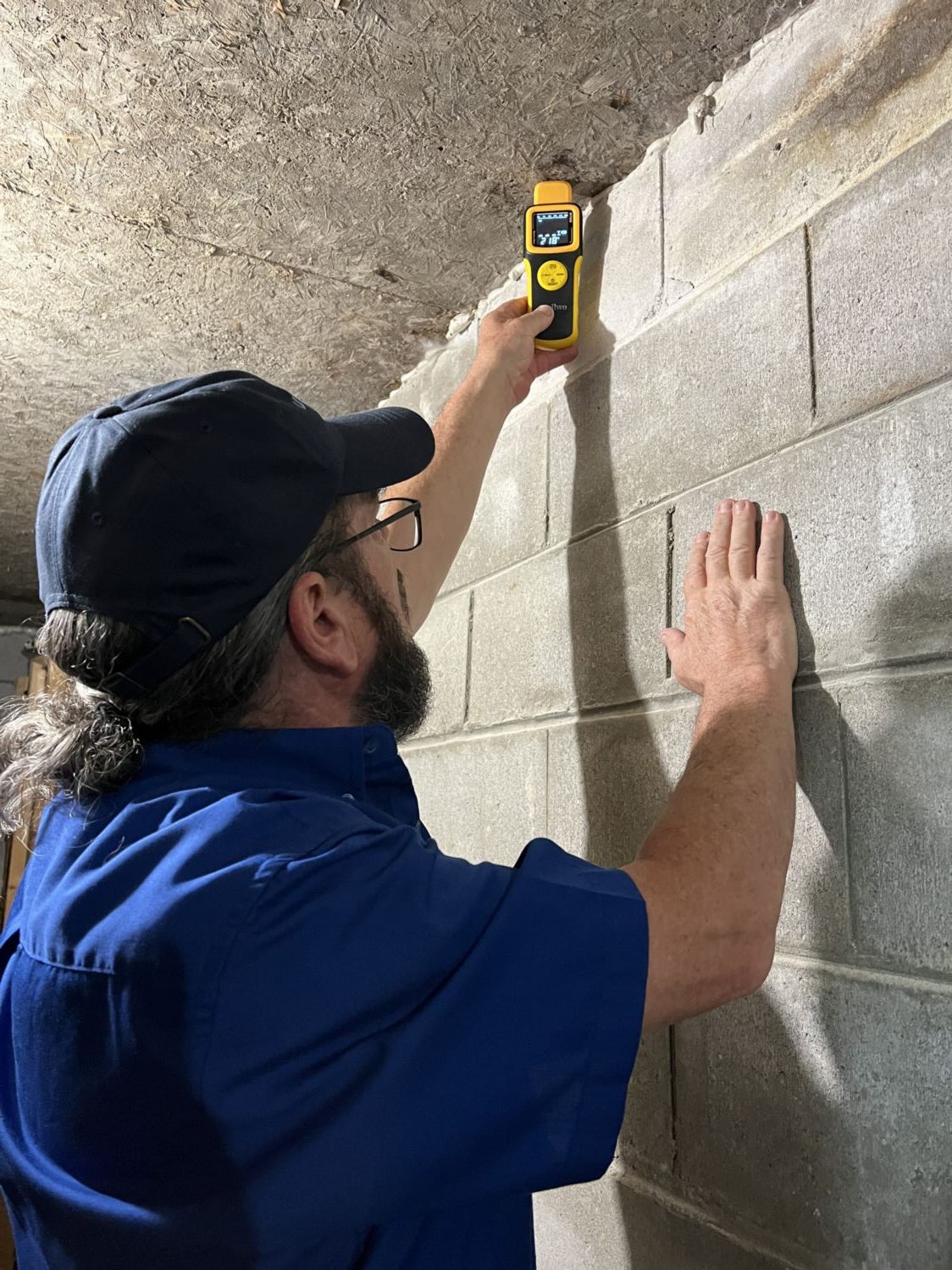
Moisture Meter being used to detect excess moisture
Structural Systems
Foundations, grading & drainage, basements, walkways, and floor, wall and ceiling structures.
Roofing
Roof coverings, drainage systems, flashings and skylights, chimneys and other roof penetrations.
Electrical Systems
Service entrance and panels, branch circuits, connected devices and fixtures, smoke and carbon monoxide detectors, and making sure your outlets are GFCI-protected.
Plumbing
Fixtures and faucets, water supply systems, drain, waste and vent systems, water heater, vents, flues and chimneys, and any sump pumps or fuel storage and distribution systems.
Heating, Ventilation and Air Conditioning Systems
Heating and cooling equipment, ducts, vents and flues.
Appliances
Dishwasher, garbage disposal, range hood, range or oven, cooktop, microwave, bathroom exhaust fans, garage door operator, and other built-in appliances.
Note: Mold and Radon Testing are not in the Standard of Practice but we may advise further testing.
Pre-Lisiting Home Inspection
A Pre-Listing Home Inspection is an evaluation of a property conducted by a professional home inspector before the homeowner puts the property on the market. This type of inspection is typically initiated by the seller to identify potential issues that could affect the sale process.
Why Do It?
Transparency: It helps build trust with potential buyers by addressing issues upfront.
Faster Sale Process: Identifying and resolving problems beforehand can prevent delays during buyer negotiations.
Accurate Pricing: Understanding the condition of the home allows for setting a realistic asking price.
Reduced Surprises: Avoid unexpected findings during the buyer’s inspection that could jeopardize the deal.
Pre-Purchase Home Inspection
A Pre-Purchase Home Inspection is an evaluation conducted by a certified home inspector on behalf of a prospective buyer before finalizing the purchase of a property. This inspection aims to assess the condition of the home and identify any potential safety concerns, necessary repairs, or maintenance issues.
Why Do it?
Informed Decision-Making: Provides buyers with a clear understanding of the home’s condition before committing to the purchase.
Negotiation Power: Allows buyers to negotiate repairs or price adjustments based on the inspection findings.
Financial Protection: Helps avoid unexpected expenses by identifying costly issues upfront.
Peace of Mind: Ensures the buyer knows what they’re investing in, reducing the risk of unpleasant surprises after moving in.
Home Maintenance Inspection
A Home Maintenance Inspection is a proactive assessment conducted by a professional home inspector to evaluate the condition of a home and identify potential maintenance issues before they become costly problems. Unlike inspections tied to buying or selling a home, this type of inspection is designed for homeowners who want to stay ahead of repairs and upkeep.
Why Do It?
Preventative Care: Identifies minor issues early, helping to prevent them from developing into major, expensive repairs.
Longevity of Systems: Ensures essential systems like HVAC, plumbing, and roofing are functioning efficiently and are well-maintained.
Budget Planning: Helps homeowners prioritize repairs and allocate resources effectively.
Peace of Mind: Provides assurance that the home is in good condition and safe for the occupants.
Century Home Inspection
A Century Home Inspection is a specialized evaluation conducted on homes that are 100 years old or older. These historic properties often have unique features, materials, and construction techniques that require a thorough understanding to assess properly. The goal of a century home inspection is to evaluate the overall condition of the property, identify potential safety or structural concerns, and highlight maintenance needs specific to older homes.
Why Do it?
Foundation and Structure: Assess for settling, cracks, or other signs of structural wear common in older homes.
Roof and Exterior: Check the condition of older roofing materials, chimneys, and siding.
Electrical Systems: Evaluate wiring for outdated components like knob-and-tube wiring or insufficient capacity for modern usage.
Plumbing: Examine pipes for materials like lead or galvanized steel that may need replacement.
Read More
Insulation and Energy Efficiency: Inspect for drafty areas and insufficient insulation, which are common in older homes.
Windows and Doors: Check for original windows and doors that may need repairs or upgrades.
Historical Features: Review the condition of unique elements like woodwork, plaster walls, and antique hardware.
Tools of the Trade
At Upstream Home Inspections we rely on a variety of specialized tools to thoroughly evaluate the condition of a property and ensure accurate, reliable assessments. Each tool serves a specific purpose, allowing inspectors to identify issues that may not be immediately visible. Here’s an overview of the most commonly used tools of the trade:
1. Drone for Roof Inspections
Purpose: Used to safely inspect roofs, particularly those that are steep, high, or otherwise inaccessible.
Features: Equipped with cameras to capture detailed images and videos of shingles, flashing, chimneys, and gutters.
2. Infrared Thermometer
Purpose: Measures surface temperatures quickly and accurately.
Use Cases: Identifying HVAC inefficiencies, inspecting insulation, and detecting overheating in electrical systems.
3. Thermal Imaging Camera
Purpose: Detects infrared radiation to visualize heat patterns and temperature differences.
Use Cases: Locating hidden moisture, leaks, insulation gaps, or electrical hotspots.
4. Moisture Meter
Purpose: Measures moisture content in materials such as drywall, wood, and concrete.
Use Cases: Identifying areas with potential water damage, mold growth, or leaks.
5. GFCI/AFCI Electrical Tester
Purpose: Tests the functionality of Ground Fault Circuit Interrupters (GFCI) and Arc Fault Circuit Interrupters (AFCI).
Use Cases: Ensuring outlets are safe and meet code requirements.
6. Multimeter
Purpose: Measures voltage, current, and resistance in electrical circuits.
Use Cases: Testing outlets, wiring, and electrical panels.
7. Combustable Gas Detectors
Purpose: Detects harmful gases like propane, methane, or natural gas.
Use Cases: Identifying gas leaks in HVAC systems, appliances, or piping.
8. Borescope
Purpose: A flexible camera tool for inspecting hard-to-reach areas.
Use Cases: Checking inside walls, ducts, plumbing, or other concealed spaces.
9. Telescoping Ladder
Purpose: A portable, adjustable ladder for accessing high or difficult-to-reach areas.
Use Cases: Inspecting attics, roofs, and elevated spaces.
10. High-Power Flashlight
Purpose: Illuminates dark areas for better visibility during inspections.
Use Cases: Examining basements, crawl spaces, and attics.
11. Binoculars
Purpose: Used for long-range visual inspections of roofs or other high areas when direct access isn’t possible.
Use Cases: Spotting roof damage, chimney issues, or loose shingles from a safe distance.
Location
Mono, Ontario
Availability
7 days a Week